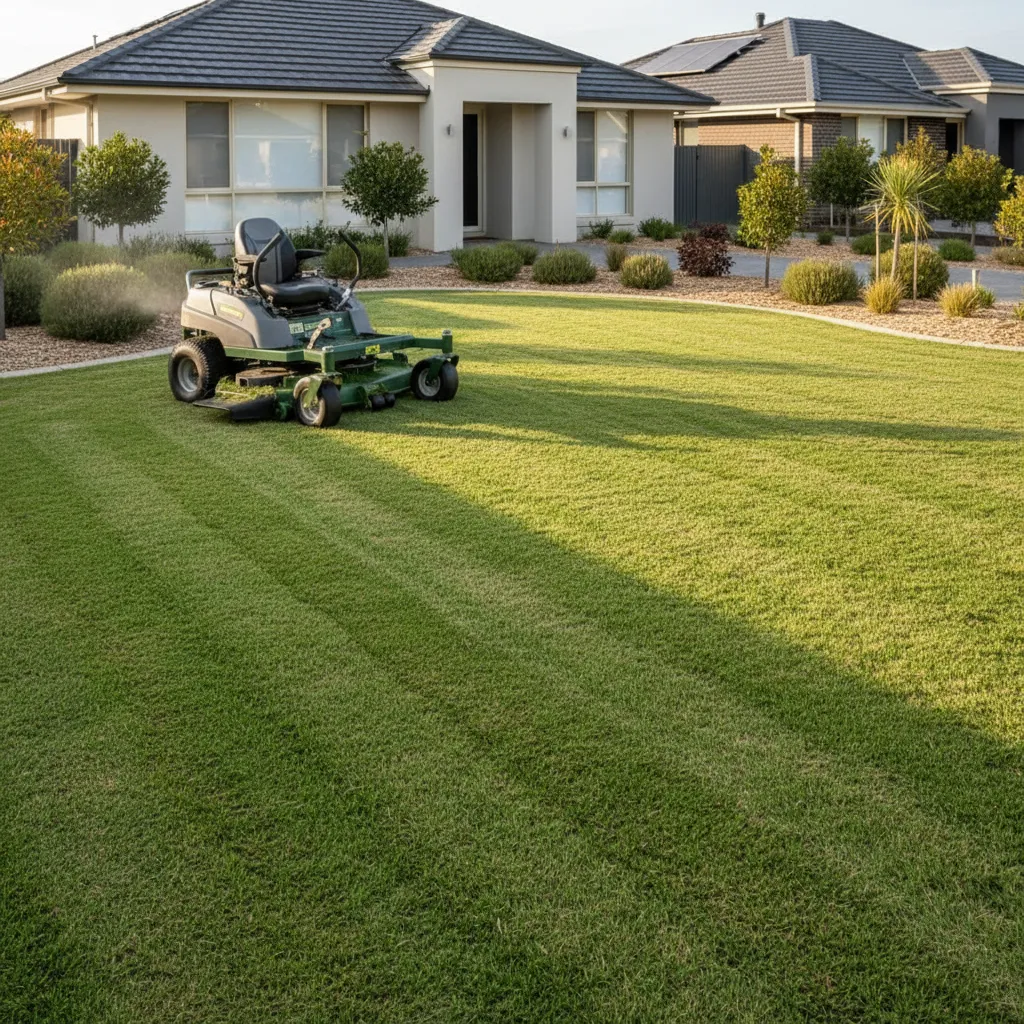
Average Lawn Mowing Cost in Sydney — What Actually Sets the Price
Sydney is not one market. What makes a lawn here cheap or costly to mow depends on the block, the side gate and the season far more than on the suburb.
Why There Is No Meaningful Sydney Average
Sydney spans terraces in Newtown with a strip of turf you could cover with a picnic rug, and semi-rural blocks out past Windsor that need a ride-on and most of a morning. Both are lawn mowing jobs in Sydney. Any single average figure that claims to cover both is wrong for both, and the people it misleads most are the ones with the smallest and the largest lawns.
What is useful is knowing which characteristics of a Sydney property actually move the number, so you can look at your own lawn and form a sensible expectation before you ring anyone. That is what the rest of this page sets out.
Call 0468 049 230 or request a free quote online — we will give you an exact price for your property before any work begins.
Seven Things That Move the Figure on a Sydney Lawn
These are Sydney-specific in a way that generic mowing advice is not. Work through them against your own property and you will know roughly where you sit before the first phone call.
How much of the block is actually lawn
Sydney blocks have shrunk while houses have grown. A modern build on a standard block may have less mowable turf than a 1960s house on a smaller block. What matters is the open turf area, not the land size on the contract.
Side access width
This is the quiet cost driver in Sydney more than anywhere. A rear lawn reached through a gate too narrow for a ride-on, or only through the house, changes the job completely. Terraces and semis with no side passage at all are the extreme case.
Front verge and nature strip
In most Sydney council areas the nature strip in front of your property is the resident's responsibility to maintain. It is a small amount of extra work but it is extra work, so it belongs in the quote rather than being assumed either way.
What fits in your green bin
A routine cut on a regular cycle generally produces clippings that mulch back in or fit the green bin. A first cut on a lawn that has run away through a wet summer often produces several times that volume, and taking it off site is real work that has to be accounted for.
Strata and shared grounds
Townhouse complexes, villas and duplexes are quoted per site, not per unit. Access to common areas, gate codes, and whether individual courtyards are included all need to be settled before a figure means anything.
The Sydney growing season
Warm-season grasses put on most of their growth from roughly October to March, and a lawn that needs a fortnightly cut in February may need one every three or four weeks in July. Regular customers usually move to a longer interval over winter rather than paying for visits the lawn does not need.
Condition when we first see it
The restoration cut on a neglected lawn is a different job from the maintenance cuts that follow it, and it is quoted separately. Once the lawn is back under control the ongoing figure settles down.
How Sydney Regions Differ
The suburb itself does not carry a surcharge. What varies by region is the kind of property you are likely to have, and that does change the work.
Western Sydney
Parramatta, Blacktown, Penrith and the growth corridors out to Oran Park and Leppington. Post-war and new-estate blocks here tend to have the largest open lawn areas in the metro area, often front and back, frequently on kikuyu that grows hard through summer. Larger area, but usually wide side access and flat ground, which keeps the work efficient.
The Hills and North West
Castle Hill, Kellyville, Rouse Hill and out towards the Hawkesbury. Bigger blocks again, and a meaningful number of semi-rural properties where a ride-on is the only sensible machine. Slope and long driveways are more common here than anywhere else in the metro area.
Inner West and Eastern Suburbs
Small terraces and semis with courtyard lawns, often reached only through the house or a narrow side passage. Area is small, but access is the constraint: everything goes in and out by hand, and there is nowhere to leave a trailer. Minimum job values matter more here than square metres.
North Shore and Northern Beaches
Sloping blocks, established gardens and a lot of buffalo. Steep rear yards and stepped terracing mean more of the work is done on foot with a line trimmer rather than a mower, which is slower per square metre than flat turf.
South and Sutherland Shire
A mix of the above. Generally moderate lawn areas, generally good access, generally straightforward. Coastal properties carry more sand and salt in the turf, which is harder on blades but does not much change the time on site.
Getting an Exact Figure for Your Property
For a standard Sydney house, one phone call is enough. Have five things ready: roughly how big the lawn area is, whether you want front, back or both, how wide the side access is, roughly how long the grass is right now, and whether you want the clippings taken away. With those answers we can give you a firm figure on the spot.
For acreage, steep blocks, strata grounds and commercial sites we will look at the property before quoting. Guessing at a site we have not seen produces either an inflated figure that protects us or an optimistic one that gets revised on the day, and neither serves you.
If your lawn has been left a while, ask for two figures: the restoration cut and the ongoing cycle. They are genuinely different jobs, and knowing both tells you what the real ongoing commitment looks like once the lawn is back under control.
Keeping the Cost Down Without Cutting Corners
The single most effective thing is staying on a regular cycle. A lawn that never gets away needs one pass instead of two, produces less clipping volume, and takes less time on site every visit. Letting it go and booking a rescue cut twice a year almost always works out worse than maintaining it.
Clearing the way helps more than people expect. Toys, hoses, pot plants and furniture left on the lawn all have to be moved and put back. Unlocking the side gate and securing the dog before we arrive saves time that would otherwise be spent standing at the fence.
Letting the clippings mulch back into the lawn where the length allows it removes a disposal step and returns nitrogen to the turf, which is better for the lawn as well as simpler. And bundling work helps: hedge trimming or a garden tidy done on the same visit as the mow avoids a second trip and is cheaper than booking them separately.
Adjusting the frequency by season is the last one. Sydney warm-season lawns barely move through July. Paying for a fortnightly cut in the middle of winter is money spent on a lawn that has not grown, and a good operator will tell you that rather than take the booking.
Frequently Asked Questions
Common questions about what lawn mowing costs on a Sydney property.
What is the average lawn mowing cost in Sydney?
There is no useful average, and that is not evasion — it is the honest position. A courtyard lawn in Newtown reached through the house and a half-acre block in Kellyville mowed with a ride-on are both lawn mowing jobs in Sydney, and any single figure that covers both is wrong for both. What we can do is give you a firm figure for your property in one phone call. Call 0468 049 230 or request a free quote online — we will give you an exact price for your property before any work begins.
Does the suburb I live in change the price?
Not directly. We do not apply a travel surcharge by suburb across the areas we service. What changes with location is the typical property: Western Sydney and the Hills tend to have larger open lawns, the Inner West and Eastern Suburbs tend to have small lawns with difficult access, and the North Shore and Northern Beaches tend to have slope. Those characteristics move the figure, not the postcode itself.
Is a smaller lawn always cheaper to mow?
Usually, but not always. A small rear courtyard that can only be reached by carrying equipment through the house can take longer than a much bigger front lawn with a wide gate and flat ground. Access, slope and obstacles matter alongside area, which is why we ask about the side passage before quoting rather than just the size.
Do you charge to mow the nature strip?
It is part of the quote if you want it done. In most Sydney council areas maintaining the nature strip in front of your property is the resident's responsibility, so many customers include it. It is a small amount of additional work, and we would rather have it in the agreed scope than assume either way and get it wrong.
How does pricing work for a townhouse or strata complex?
Strata and townhouse grounds are quoted per site after we have looked at it, not from a description over the phone. We need to know the extent of the common turf, whether individual courtyards are included, how gates and access work, and what frequency the committee wants. Commercial and strata mowing is a different scoping process from a single residence.
Will my price change between summer and winter?
The price per visit does not change with the season. What usually changes is how often you need one. Sydney warm-season lawns grow hardest from around October to March and slow markedly through winter, so most regular customers move to a longer interval over the cooler months rather than paying for cuts the lawn has not earned.
What is included in the figure you quote?
The mow, edging along paths, driveways and garden borders, trimming around trees, posts and fence lines, and a blow-down of every hard surface we have worked over. There is no call-out fee on top and no separate charge for edging. If something outside the agreed scope comes up on the day we stop and re-quote before doing it.
Related Guides
Find Out What Your Sydney Lawn Costs
Call 0468 049 230 or request a free quote online — we will give you an exact price for your property before any work begins.
2,100+ Customers | Licensed & Insured | Same Day Service